
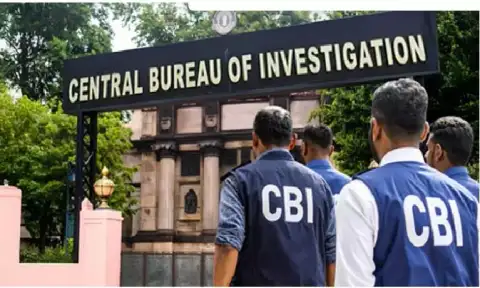
A CBI court in Chennai has convicted and sentenced eight accused — two public servants and six private persons — to 10 years' rigorous imprisonment in a Rs 1.97 crore bank fraud case relating to the period 2007-08.
Fines were imposed separately: Rs 50 lakh each on N. Gopalakrishnan, the then Branch Manager of SBI's Chengam branch; P. Balamurali, then Rural Marketing and Recovery Officer at the same branch; and private individuals R. Venkataraman, S. Ravi and D. Sankar. Rs 20 lakh each was imposed on R. Rajan, P. Pannerselvam and T. Murugan.
The case itself is ordinary in structure and worth examining for that reason. It is not a large corporate exposure involving complex structures; it is 728 small loans, sanctioned inside one branch, allegedly against forged documents — a pattern that is easier to replicate than almost any other form of bank fraud.
What the prosecution alleged
The CBI registered the case on 23 September 2011 on a complaint from the Regional Manager, Region-V, SBI, Chengalpattu.
The allegation was that between October 2007 and May 2008, three officials of SBI's Chengam branch — Gopalakrishnan, K. Ravichandran, the then Deputy Manager (Advances), and Balamurali — connived with K. Purushothaman, proprietor of M/s Kanthamma Milk Chilling Plant in Chengam Taluk, and others in sanctioning 728 diary loans totalling Rs 2,32,96,000 under a tripartite arrangement, based on fraudulent and forged applications and loan documents in the names of purported borrowers, and without following the pre- and post-sanction formalities prescribed for diary loans.
The wrongful loss to the bank was assessed at Rs 1,97,27,692.
Following investigation, a chargesheet was filed on 25 June 2013 against ten accused, and the trial court framed charges on 1 May 2016. During the trial, Purushothaman and Ravichandran died, and the charges against them abated. The court convicted the remaining eight.
The structure: many small loans, one anchor
The tripartite arrangement is the mechanism worth understanding. Where a bank lends to individuals against the security of an arrangement with a larger counterparty — here, a milk chilling plant as the offtaker for dairy animals purchased with the loan — the credibility of the borrower is derived from that counterparty.
That derivation is the vulnerability. If the documentation concerning the anchor entity is accepted without challenge, verification of the individual borrowers becomes a formality, and the number of files that can be processed rises sharply. At an average ticket of roughly Rs 32,000 across 728 loans, each individual loan is small enough to attract routine handling and too small, on its own, to trigger heightened review.
The result is a portfolio that looks diversified — 728 separate borrowers — and is in fact concentrated on a single point of failure: whether those borrowers and the underlying transactions existed as described.
A second feature compounds it. The same branch that sanctioned the loans handled their recovery, with the branch's own recovery officer among the accused. Neither product origination nor monitoring was independent of the branch's internal relationships.
The timeline is the real finding
Set the dates against each other. The loans were sanctioned between October 2007 and May 2008. The FIR was registered in September 2011. The chargesheet was filed in June 2013, charges framed in May 2016, and conviction has now been delivered and sentenced.
Nearly two decades separate the conduct from the sentence, and roughly fifteen years separate the registration of the case from the verdict. Whatever else this demonstrates, it is a working illustration that punishment delayed to this degree functions weakly as deterrence.
The abatement compounds the problem. Two of the ten accused — the proprietor said to be at the centre of the arrangement, and the Deputy Manager for Advances — died during trial, so their cases ended without adjudication. Whether the primary beneficiaries were the two men whose cases abated, or eight people now sentenced, is not something the verdict establishes, but the practical effect is that the trial's central figures were never judged.
What could have caught it earlier
None of the controls below is novel; the recurring finding in cases of this shape is that several existed in policy and none functioned.
- Concentration monitoring. Exception reports keyed to Counterparty or Tripartite Agreement identifiers, not just borrower name, would have surfaced 728 loans to a single offtaker inside eight months.
- Duplicate detection. Fictitious borrower pools typically show repeated or near-duplicate identity attributes — addresses, contact numbers, identity document patterns, signatures — that are obvious in aggregate and nearly invisible per file.
- Segregation of duties. Sanctioning authority, disbursement and recovery sitting in the same small branch with the same officers removes the cheapest control available: someone independent looking at it.
- Mandatory physical verification with sampling. Pre-sanction inspection is frequently reduced to document collection; a verification sample that actually visits would have failed at least some of these files.
- Rotational transfer and mandatory leave, which remains an effective and underused control in branch-based lending.
- Concurrent and statutory branch audit exceptions, where origination trends in a single product line at one branch should be escalated rather than merely reported.
Lessons for lenders
The transferable point is that this pattern scales with delegation, not with ticket size. Any product where a trusted anchor entity substitutes for borrower verification produces the same exposure: microfinance joint liability groups, dealer and supply chain finance, employer-linked personal loans, and any programme lending where volume targets sit alongside delegated sanctioning.
The controls that work are cheap and unglamorous: monitor by counterparty rather than borrower, sample-verify physically, rotate staff, and treat volume growth in a single product at a single branch as an exception rather than a success.
Sources
- Central Bureau of Investigation release: registration of the case on 23 September 2011 on the complaint of the Regional Manager, Region-V, SBI, Chengalpattu; the October 2007 to May 2008 period; roles of N. Gopalakrishnan, K. Ravichandran and P. Balamurali at SBI Chengam branch; K. Purushothaman, proprietor of M/s Kanthamma Milk Chilling Plant; 728 diary loans totalling Rs 2,32,96,000 under a tripartite arrangement; wrongful loss of Rs 1,97,27,692.
- Procedural record: chargesheet filed 25 June 2013 against ten accused; charges framed 1 May 2016; charges abated following the deaths of Purushothaman and Ravichandran; conviction and sentencing of the remaining eight to 10 years' rigorous imprisonment, with fines of Rs 50 lakh and Rs 20 lakh as set out above.
- Note: the average ticket size of roughly Rs 32,000 is the author's calculation from the disclosed totals. Analysis of the tripartite structure, control failures, deterrent effect of delay and recommended mitigations is the author's, not that of the CBI or the court.