OMAHA, Neb. — A $5 million relief fund has opened for businesses along Omaha's streetcar construction corridor, offering grants and low-interest, partly forgivable loans to owners who can document losses from more than a year of disruption.
The Streetcar Business Impact Fund was created by the Nebraska Enterprise Fund in partnership with a private donor and the Streetcar Alliance. It is structured in three phases, and applicants are being asked to apply early: awards are made first-come, first-served, and meeting the criteria makes a business eligible rather than entitled.
What is actually on offer
The administrator's own programme page lists four funding options rather than the three implied by early reporting:
- Grant (Survive): $10,000.
- 100% Forgivable Loan (Strengthen): up to $50,000.
- 50% Forgivable Loan (Recover): up to $75,000, Phase 3.
- 2% Loan (Recover): up to $100,000, Phase 3.
Eligibility turns on the size of the revenue decline measured over a six-month window, comparing July–December 2025 against January–June 2026. A 10% or greater decrease qualifies for the grant. A decrease of 2% or more qualifies for the fully forgivable loan. Growth of less than 2% qualifies for the half-forgivable loan, and the 2% loan is available to businesses with no significant sales impact — including new businesses, where every other option is restricted to existing ones.
Businesses must be located within one block of the route, be able to show that construction affected access, be legally registered, and supply financial and tax documentation. Forgivable and low-interest loans are limited to businesses with under $3 million in annual revenue.
All loans carry 2% interest during construction. Forgiveness occurs quarterly, and no payments are due on forgivable loans until 1 January 2028, with "project completion" defined as that date or whenever streets, sidewalks and access return to normal.
Two conditions deserve attention before anyone signs. Borrowers must remain open during construction and stay open for at least two years after project completion. Applicants must also complete technical assistance: a 360-degree business assessment and at least three support sessions. Application fees are waived.
A correction worth noting
The launch coverage reported that the additional $10,000 grant plus forgivable loan required businesses to prove a 10% year-over-year revenue drop. The programme's own documentation sets the 10% test on the grant and requires only a 2% decline for the fully forgivable loan.
That is a material difference for a business whose sales fell by 5%, and it is why the eligibility table published by the administrator should take precedence over any summary — including this one.
What $5 million buys
The arithmetic puts the fund's reach in perspective. Phase one delivered $10,000 grants to 27 businesses the city had confirmed suffered documented sales declines — about $270,000, or roughly 5.4% of the total.
Scale that up. If all of the more than 75 businesses that applied early took the maximum combined grant and fully forgivable loan of $60,000, drawdown would reach $4.5 million against a $5 million fund. Add any Phase 3 loans of up to $100,000 and the ceiling arrives very quickly.
Subsequent reporting is consistent with that trajectory: more than 60 corridor businesses had received funds by late August, and the programme was reported to have paid out more than $4 million by mid-September. A fund of this size was always going to be rationed rather than universal, and the first-come-first-served rule means timing determined who was helped.
Why the structure is forgivable rather than free
A repayable-unless-forgiven loan looks like a technicality, but it does three things a straight grant cannot.
It keeps money recoverable if the business closes early, since the stay-open condition becomes enforceable. It creates a reason for the lender to keep contact through quarterly forgiveness rather than once at disbursement. And it lets the administrator attach the technical assistance requirement, which converts a rescue payment into a retention programme.
The practical implication for a borrower is that this is credit, not income, until forgiveness is recorded. On a balance sheet it sits as a liability; on a cash forecast it is a future obligation if trading does not recover as assumed. Owners should model the pre-forgiveness case, not only the forgiven one.
The gap this fills
Public infrastructure projects routinely disrupt neighbouring trade without triggering compensation. Where no land is taken from a business, there is generally no claim to make, so the loss to the trader sits outside the project's own cost accounting. Losses fall hardest on small operators with thin margins and no second location to shift demand to.
A donor-funded programme administered outside city hall is therefore not a substitute for public compensation so much as a workaround for its absence. The risk of that model is duration: construction runs for years, while donations are front-loaded. By late September most of the money was already committed, and the corridor work is not scheduled to finish until 2028.
What owners are reporting
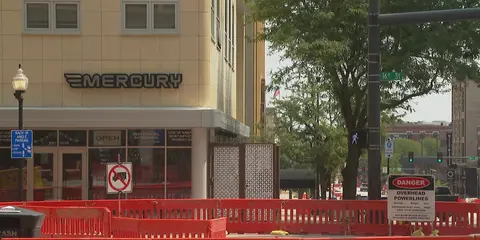
Disruption showed up in more than lost sales. Sam Morley, owner of The Reading Room, said he lost about 20% along with staff who could not get to work: "Ubers just wouldn't want to deal with it." Clark Ross, owner of Mercury, called the funding "single-handedly the biggest benefit we've had since we started this in February. I think this is enough to save a lot of businesses and a lot of jobs." Michael Young, chief operating officer of the Nebraska Enterprise Fund, said the money went to immediate needs: "This is life changing. This has been salaries, this is equipment, this is improvements."
Practical steps for applicants
- Prepare the six-month comparison — July to December 2025 against January to June 2026 — before applying, because that schedule decides which option you can access.
- Apply early. Funding is committed in order of application, not allocated by need.
- Assemble tax records, business registration and a use-of-funds plan now; disrupted operators frequently lack current records, and documentation is part of eligibility.
- Model the loan before modelling the forgiveness, including the commitment to stay open for two years after completion.
- Ask the administrator to confirm your threshold in writing, given the discrepancy between coverage and programme terms noted above.
Sources
- Nebraska Enterprise Fund, Streetcar Business Impact Fund programme page: four funding options and amounts, the July–December 2025 vs January–June 2026 revenue test, threshold percentages, one-block and under-$3 million revenue limits, 2% interest during construction, quarterly forgiveness, payments deferred to 1 January 2028, project completion definition, two-year stay-open requirement, technical assistance requirements, waived application fees, first-come-first-served allocation and documentation requirements.
- WOWT, 3 August 2026: $5 million launch, three-phase structure, $10,000 grants to 27 businesses already distributed, quoted reactions from Sam Morley, Michael Young and Clark Ross, and the town hall scheduled for 17 August at 5 p.m.
- Omaha Streetcar newsletter, 7 August 2026, confirming applications were open and the programme is donor-funded.
- Omaha World-Herald, 30 August 2026: more than 60 corridor businesses had received funds. WOWT, 11 September 2026: the relief fund had paid out more than $4 million.
- Note: the $270,000 phase-one total, the 5.4% share and the $4.5 million maximum drawdown scenario are the author's calculations. Analysis of the eligibility discrepancy, forgivable-loan mechanics, the compensation gap and the applicant checklist is the author's, not the fund administrator's.