Ørsted reported first-half 2026 results showing higher operating earnings and record offshore generation, reaffirmed its full-year guidance, and said it now has sufficient robustness to pursue new offshore wind opportunities while restoring its dividend.
EBITDA excluding new partnerships and cancellation fees came to DKK 15.0 billion (about US$2.3 billion) in H1 2026, up from DKK 13.9 billion a year earlier. On the basis of that performance the company said it remains on track to deliver full-year 2026 EBITDA — on the same adjusted basis — in excess of DKK 28 billion (about US$4.3 billion). Gross investment guidance was maintained at DKK 50–55 billion.
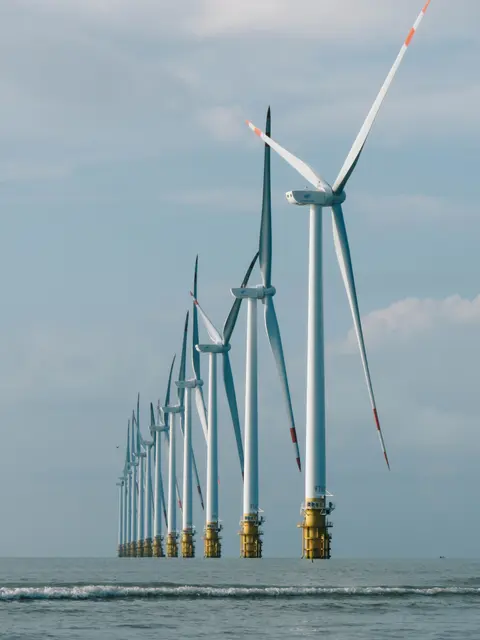
Offshore generation reached 11.2 TWh in the first six months, 23% more than in the same period last year. All construction projects, including Hornsea 3 in the UK, were reported progressing to schedule and within planned costs.
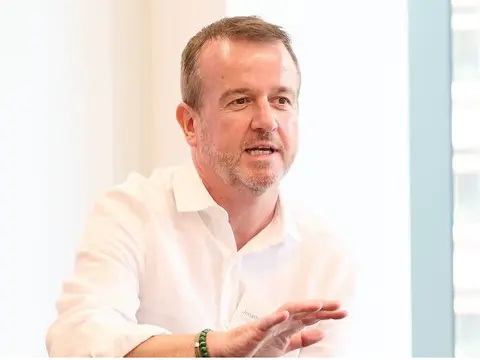
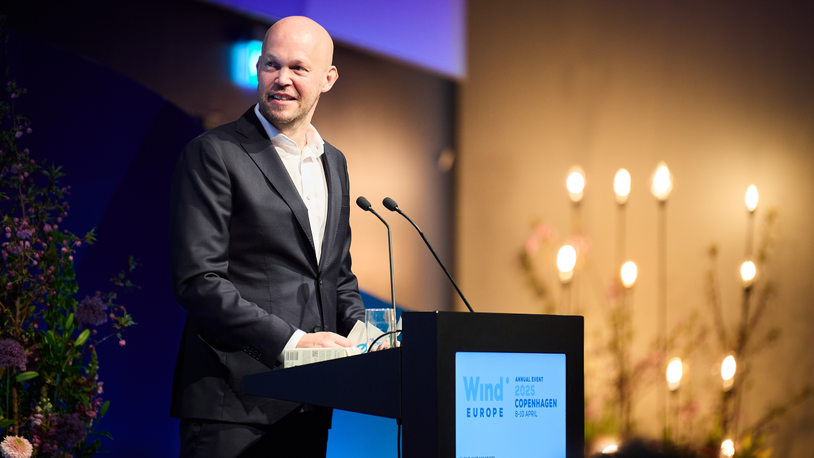
"Our renewable assets have produced more renewable energy in the first half of 2026 than ever before, and we remain on track to deliver on our financial guidance for the year," said group president and chief executive Rasmus Errboe. "With the measures we have taken in the last 18 months, we have the necessary robustness to pursue new, value-creating opportunities in offshore wind, while also reinstating a dividend payout to our shareholders as planned."
Two qualifiers that matter
The headline EBITDA figure carries a qualifier that is easy to lose in summarising, and which changes what the number means.
This is EBITDA excluding new partnerships and cancellation fees. Those two items are not rounding errors in Ørsted's accounts: farm-down gains from selling stakes in projects, and payments received when counterparties cancel contracts, have historically been very large and highly variable. Excluding them isolates operating performance; including them would have swamped it in some periods.
It follows that the full-year guidance of above DKK 28 billion is given on the same adjusted basis. Comparing it to another company's EBITDA, or to Ørsted's own reported figure inclusive of those items, would be a category error.
The second qualifier is in the word adjusted attached to nothing but sitting behind everything: H1 EBITDA rose 8% year on year, which is solid but not dramatic, and it sits alongside other measures that moved the other way.
Where the money actually went
Net profit for the first half was DKK 3.3 billion, down from DKK 8.2 billion a year earlier, with the company attributing the decline principally to divestment gains in the prior-year period together with higher tax and higher non-cash impairment losses in the current one. Second-quarter net profit was DKK 0.7 billion against DKK 3.4 billion.
Return on capital employed fell to 3.1% from 7.5%, mainly due to higher capital employed and lower earnings over the trailing twelve months.
That last metric deserves more attention than it usually receives. ROCE of 3.1% is the honest scoreboard on a business investing DKK 50–55 billion a year: it reflects both the capital intensity of offshore wind and where the company is in its construction cycle, since assets under construction generate no return but are carried in capital employed. The trajectory of that number matters more than the level in any single half.
Understanding the composition also helps explain why a dividend decision is significant here — see below.
Reading the dividend decision
Ørsted said it will reinstate dividend distributions for financial year 2026, with the first payment expected in 2027. The policy will apply to financial years 2026–2028 and is expected to increase annually, with the specific level to be announced in the Annual Report 2026.
Three aspects are worth separating.
A dividend resumption alongside gross investment of DKK 50–55 billion means shareholder returns are being funded alongside, not after, the construction programme — a statement about cash flow confidence rather than about spare capital.
Announcing a framework and deferring the level is a middle path. It commits to the principle and to annual progression while retaining discretion on quantum until full-year results are known. Investors should note that "expected to increase annually" is an intention, not a commitment comparable to a stated payout ratio.
And with ROCE at 3.1%, the capital allocation question is live: returns retained and reinvested at low incremental returns compete with distributions. Choosing to do both is a judgement the market will test against each subsequent capital allocation decision.
The political argument the CEO is making
Errboe tied recent energy market volatility to a policy conclusion: that "recent volatility in global energy markets reinforces the need for Europe to accelerate electrification and the build-out of renewable energy," adding encouragement at recent EU legislative proposals focused on accelerating electrification across sectors.
This is more than rhetorical context. Offshore wind economics depend on future electricity prices, on the pace of permitting, and on how quickly demand electrifies — so a CEO arguing for faster electrification is arguing for the demand side of his own business. It is a legitimate position and should be read as advocacy.
The substantive point holds independently: a build-out cycle measured in years is most exposed to exactly the price volatility seen recently, which makes policy stability worth more to developers than any single support mechanism.
Two items outside the operating narrative
In June the Danish Maritime and Commercial High Court ruled in favour of Ørsted in cases concerning the former Elsam, and the plaintiffs decided not to appeal. That removes a litigation overhang, though the absence of appeal is the operative fact — a ruling that might have gone further is now settled.
Separately, the statement notes that measures taken over the last 18 months produced the robustness now cited. Which measures — disposals, restructuring, capital discipline — is not spelled out in the summary, and identifying them is the work of reading the interim report rather than the release.
Watch list
- Whether "value-creating opportunities" convert into something concrete: a bid, a farm-down, or a partnership. Until then the phrase is aspirational.
- The impairment line. Non-cash but informative, since it reveals where asset assumptions are being revised.
- Direction of ROCE as major projects enter operation and begin contributing rather than merely absorbing capital.
- The declared dividend level in the Annual Report 2026, measured against the maintained investment programme.
- Construction milestones at Hornsea 3 and across the portfolio, which remain the largest single determinant of whether the framework holds.
- Farm-down and partnership activity, since those items sit outside the guided metric but inside the cash flow.
Sources
- Company results for H1 2026: EBITDA excluding new partnerships and cancellation fees of DKK 15.0 billion against DKK 13.9 billion a year earlier; the reaffirmed full-year guidance of EBITDA above DKK 28 billion on the same basis; offshore generation of 11.2 TWh, 23% higher year on year; all construction projects including Hornsea 3 progressing to schedule and within planned costs; and the quotations from Rasmus Errboe on operational performance, robustness to pursue value-creating opportunities, European electrification and the priority of delivering the construction portfolio.
- Coverage of the results: the 8% year-on-year increase in adjusted EBITDA; second-quarter EBITDA of DKK 5.4 billion against DKK 5.3 billion; net profit of DKK 3.3 billion against DKK 8.2 billion, attributed principally to prior-year divestment gains and higher tax and non-cash impairment losses; second-quarter net profit of DKK 0.7 billion against DKK 3.4 billion; return on capital employed of 3.1% against 7.5%; maintained guidance and gross investment guidance of DKK 50–55 billion; dividend reinstatement for financial year 2026 with first payment expected in 2027, a policy covering 2026–2028 expected to increase annually and the level to be announced in the Annual Report 2026; and the June ruling of the Danish Maritime and Commercial High Court in favour of Ørsted in cases concerning the former Elsam, with plaintiffs not appealing.
- The company's interim financial report for H1 2026, published 13 August 2026, as the primary source for all figures above.
- Note: the US dollar equivalents cited in the source material convert at the rates used at the time of publication. Analysis of the ex-partnerships and ex-cancellation-fees basis, the composition of the profit decline, the reading of ROCE, the dividend framework, the characterisation of electrification commentary as advocacy, and the watch list is the author's and should not be attributed to Ørsted.