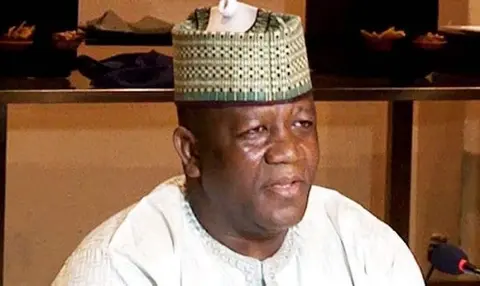
Geregu Power Plc says it has settled its outstanding bond obligations, with payment effected on 19 August 2026 — closing out an episode that began with a missed instalment three weeks earlier and ended with the company's chairman funding it himself.
"Our Board is fully committed to meeting Geregu's financial obligations to its bondholders and trustees. I am pleased to confirm that payment has just been effected in line with our obligations," said Chairman Senator Abdul'aziz Abubakar Yari.
The company said the full payment demonstrates its commitment to resolving its financial responsibilities and maintaining investor confidence, and that it is working with relevant parties to resolve legacy administrative matters predating the current Board — a process it said would not affect its ability to meet obligations to bondholders.
What N40 billion actually refers to
The headline figure needs unpacking, because two different numbers are in circulation and only one describes money that changed hands in August.
N40.09 billion is the size of the Series 1 Senior Unsecured Bond issued by Geregu Power in July 2022, carrying a 14.5% coupon and issued under a N100 billion bond issuance programme. That instrument is the source of the obligation, not the amount settled.
The immediate default was smaller. On 28 July 2026 the company was due to pay roughly N6 billion to bondholders covering the eighth coupon and part of the principal, and did not. Bondholders did not receive credit alerts, and the miss triggered alarm across the market — one report states that a rating agency withdrew its ratings on the company because of it.
The gap between those figures is large enough that readers should insist on precision. Whether the August payment cleared only the arrears or redeemed the balance outstanding has not been consistently reported, and the distinction determines everything about what happens next. Until the filing to Nigerian Exchange is published in detail, treat N40.09 billion as the programme reference and await confirmation of the amount actually paid.
Who paid, and why that matters more than the payment
According to a release from his media office, Yari personally provided the funds for the settlement. He framed the intervention as protecting the company and supporting the power sector, adding that he is pursuing reimbursement from the former management and board: "We continue to engage the former management and board of Geregu Power Plc for reimbursement. I have decided to do this in order to save the shares of the company."
The bond predates the current ownership and board by some distance — issued in July 2022, more than three years before the present leadership took control in December 2025. That timing explains both the reimbursement claim and the framing of the obligation as inherited.
From a governance standpoint, a controlling shareholder personally funding an issuer's debt service raises questions that the market will want answered in filings:
- On what terms did the funds enter the company — equity, shareholder loan, or direct payment to the trustee on the issuer's behalf? Each has different disclosure and priority consequences.
- Was the arrangement treated as a related-party transaction, with board and audit committee approval and disclosure to Nigerian Exchange and the SEC?
- If the company intends to reimburse the chairman, that is a future cash outflow and should be reflected in liquidity planning and disclosed.
- Could the company not pay from operating cash, or was this a timing or process failure? Only the company can answer that, and the answer determines whether the risk is structural or administrative.
The arithmetic behind the eighth coupon
Two derived observations help set expectations.
A 14.5% coupon on N40.09 billion implies roughly N5.8 billion of annual interest. A payment described as the eighth coupon about four years after issuance is consistent with semi-annual payments, which would put each coupon near N2.9 billion before any principal amortisation — meaning the roughly N6 billion due in July sat close to what a combined coupon-and-amortisation instalment would look like. These are inferences from the reported figures, not disclosed terms.
Amortisation also matters. Because part principal was being repaid already, each subsequent instalment should be smaller in outstanding balance, though not necessarily in cash, since later payments can be structured heavier on principal. Any assessment of the next instalment needs the actual schedule rather than a flat projection.
How the market will read it
Issuers in Nigerian capital markets have generally serviced corporate bonds without interruption, so a missed instalment by a listed generation company carries disproportionate signalling effect — particularly where the issuer's own disclosures emphasise financial and corporate governance standards.
Payment restores optionality but not necessarily pricing. Three factors will shape how bondholders repriced the credit:
Source of funds. A cure funded by the issuer's operations is a liquidity question answered. A cure funded by the chairman answers it differently, and leaves investors asking whether the same support would be available next time.
Speed. Roughly three weeks elapsed between the missed payment and settlement. Short enough to suggest a process failure rather than insolvency; long enough that the default was recorded.
Rating status. A withdrawal following the miss is itself an adverse event. Whether the rating is reinstated, and at what level, will be the cleanest external marker of how the episode is assessed.
Cross-default is the mechanism that would turn this from an episode into a problem. Most bond documentation treats a payment default under the programme as a trigger for other obligations, so the apparently narrow issue — one missed instalment — could have reached further had it remained uncured. Settling promptly was therefore worth more than the amount paid.
Context worth keeping in view
Geregu's difficulties sit inside a power sector whose payment chain has been strained for years, and the company's notice referenced engagement with the Securities and Exchange Commission, Nigerian Exchange and the Nigerian Electricity Regulatory Commission while the matter was resolved. That the list of thanked regulators includes the sector regulator is a reminder that generation companies depend on the wider settlement arrangements for their own liquidity.
Yari also reaffirmed support for the Federal Government's Renewed Hope Agenda and said Geregu would continue to contribute reliable generation, noting dependable electricity remains central to Nigeria's economic development.
Watch list
- The detailed NGX filing: the exact amount paid, date of value, source of funds and whether the payment covered arrears only or the outstanding balance.
- Whether it was booked as a shareholder loan, a capital contribution, or a direct settlement — and whether it was processed as a related-party transaction.
- Whether the rating agencies engage again and at what level.
- The outcome of the reimbursement claim against the former management and board.
- The next scheduled coupon and whether it is met from operating cash, which is the only real test of whether this was a one-off.
Sources
- Geregu Power statements: confirmation of payment on 19 August 2026, the quotation from Chairman Abdul'aziz Abubakar Yari, the commitment to bondholders and trustees, engagement with relevant parties over legacy administrative matters predating the current Board, support for the Federal Government's Renewed Hope Agenda, and a commitment to provide formal confirmation upon completion of the payment process.
- Nigerian business press reporting 20–21 August 2026: identification of a N40.09 billion Series 1 Senior Unsecured Bond issued in July 2022 at a 14.5% coupon under a N100 billion programme; a payment of about N6 billion for the eighth coupon and part principal due 28 July 2026 that was not made; bondholders not receiving credit alerts; a rating withdrawal following the default; the company's notice to Nigerian Exchange thanking bondholders, the SEC, the NGX and NERC; current ownership and board having assumed control in December 2025.
- Report of the chairman's media office stating that Yari personally provided the funds, together with his remarks on seeking reimbursement from the former management and board and his stated reason of protecting the company's shares.
- Note: the implied annual interest of about N5.8 billion, the semi-annual schedule inference, all governance questions posed, the three-factor market read and the watch list are the author's analysis and should not be attributed to the company, its board or its advisers.