The company will take a 70% operated stake in the deepwater concession from Helleniq, which will retain a 30% share.
Block 10 is in its second exploration phase, with 2D and 3D seismic studies acquired to support analysis of potential drilling targets.
The two parties plan further technical evaluation of the acreage and future drilling phase.
Helleniq CEO Andreas Shiamishis said, "Chevron's entry into Block 10 further strengthens our existing partnership and aligns the interests of both companies across all blocks in the Southern Ionian, creating a significantly larger exploration area in which we jointly participate."
Andrew Deighan, director of Exploration, Middle East and North Africa with Chevron, added, "This is another key milestone for Chevron as we continue to build momentum in the Mediterranean region, an area where we are looking to further expand and strengthen our global exploration portfolio.
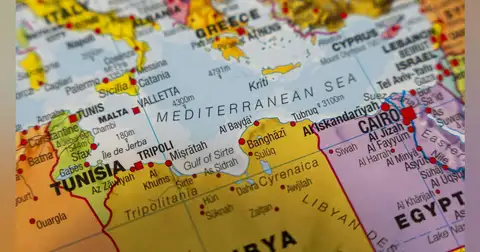
MOL Group and TPAO ink offshore Libya PSAIn the southern Mediterranean, Repsol MOL Group and Türkiye Petrolleri (TPAO) have signed a production sharing agreement (PSA) for the O7 offshore exploration block, after securing an exploration license.
Repsol operates with a 40% interest, with TPAO also holding 40% and MOL Group holding 20%.
O7 is located 140 km northwest of Benghazi and extends over an area of more than 10,300 sq km in water depths of more than 1,500 m.
The minimum work commitment includes acquiring 1,500 km of 2D seismic and 2,300 sq km of 3D seismic, as wels as the drilling of one exploration well.
In January, MOL Group also formed a partnership with Libya's National Oil Corp. in oil and gas, covering sharing of expertise, technological cooperation and identifying new business opportunities to expand their international presence.
NextGeo concludes trenching for Bouri pipelay offshore Libya
NextGeo and Pharos Group have completed post-lay trenching for the Bouri Gas Utilisation project offshore Libya for the Mellitah Oil & Gas joint venture.
Pharos deployed its Q1000 vehicle for subsea post-lay trenching of the 14-inch raw gas sealine and the 10-inch export gas sealine. Both pipelines included an associated fiber-optic cable that were additionally trenched as part of the scope.
The company worked with Next Geosolutions and its subsidiary Rana Subsea on the campaign, with equipment mobilized onto the support vessel Olympic Delta. Saipem is the overall project manager.